
Digital sales platform
Article: Largely unseen, yet essential: long-distance rail’s digital sales platform
One in two people in Germany encounters it via the connected customer channels bahn.de and DB Navigator: long-distance rail’s digital sales platform. It links a wide range of Deutsche Bahn products and integrates a significant share of public passenger transport in Germany and parts of Europe. This makes it one of the country’s largest digital platforms. Long-distance rail’s digital sales platform is conceived, developed and operated entirely within the DB Group. That creates end-to-end accountability and a strong sense of ownership among everyone involved – from the initial idea through to operations.
From separate sales channels to an integrated foundation
Over the years, Deutsche Bahn’s sales organisation developed a range of different sales channels. Travel centres, ticket machines and the digital channels bahn.de and DB Navigator evolved side by side, but with little integration between them. For example, customers who bought a ticket from a machine could not automatically view it in DB Navigator. “We were unable to create a consistent customer journey or service experience across multiple channels because we were working with separate silos,” recalls Ralf Gernhold, Head of Innovation, Delivery and Operations, Digital Platform at DB Fernverkehr.
At the time, the technical backbone of digital sales was a central platform known as BahnDirekt. For decades, it shaped Deutsche Bahn’s digital sales landscape and was still partly based on legacy mainframe technology. This made further development complex and limited the scope for cross-channel functionality. A new, more flexible and integrated solution was needed.
This led to a major step in 2015/2016: together with DB Vertrieb, where all sales channels were still based at the time, DB Systel transformed the static BahnDirekt information landscape into a dynamic, highly scalable information service. It ran on AWS (Amazon Web Services) and was one of DB Systel’s first major systems to be successfully migrated to the cloud. At the same time, a completely new digital sales platform was developed in parallel as part of a large-scale project.
Modern architecture as the basis for stability and scalability
For travellers, the new digital sales platform for long-distance rail delivers one thing above all: reliable search, booking and travel information – even when demand is exceptionally high. Whether ahead of public holidays, during operational disruption or at peak travel times, the systems remain stable and automatically respond to increased demand.
This is made possible by a modern, cloud-based architecture. Behind the scenes, the digital sales platform processes the travel information requests submitted via the connected customer channels. In 2025, DB Navigator handled an average of 177.7 million mobile travel information requests per month, while bahn.de processed 27.1 million. The platform adapts automatically to current usage, absorbs peak loads and ensures that connections, prices and tickets remain available at all times. Changes – for example to timetables or offers – can be introduced continuously, without disruption and usually without travellers even noticing.
To ensure development and operations work hand in hand, this large team collaborates closely. “Everything in operations is expected to run with a very high degree of automation,” says Thomas Weber, Product Owner, Sales Solutions Operations Enterprise Cloud unit at DB Systel. The goal is clear: a digital infrastructure that is highly complex behind the scenes, yet simple and reliable for travellers.
“If our systems do not work, Deutsche Bahn customers cannot buy tickets or receive information about their journey. Stable and secure operations are therefore incredibly important.”

Integrated travel information for travellers across all channels
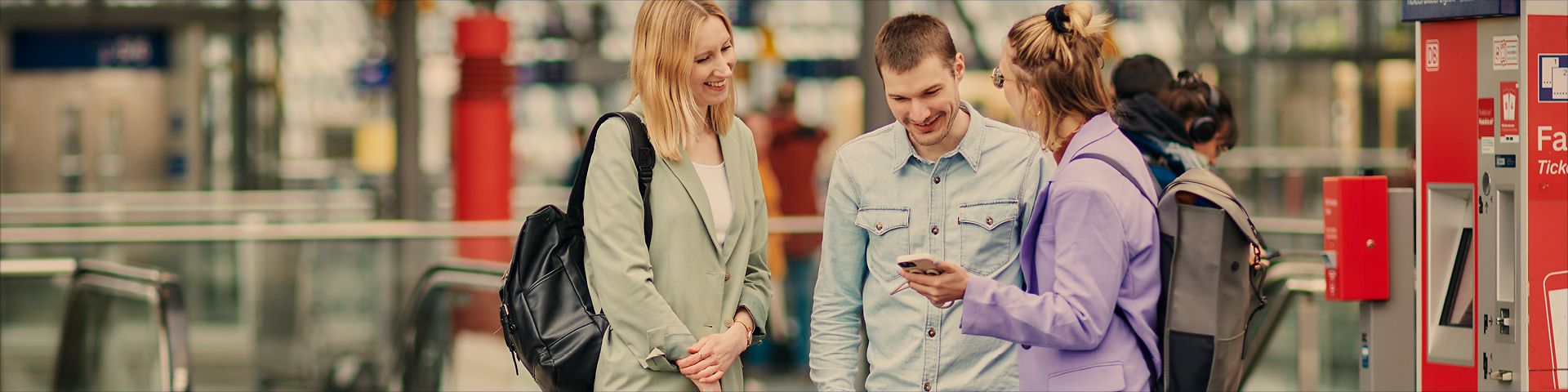
For travellers, one major advantage is that all journey information is now available from a single source rather than scattered across different systems. Connections and tickets can be found and booked seamlessly across channels and touchpoints, both nationally and internationally. “In DB Navigator, we have integrated what were once isolated silos into a single information service, including for international travel. Today, for example, you can search for connections from Frankfurt Central Station to Eigergletscher station in Switzerland and book the required tickets directly. That was not possible before,” says Ralf Gernhold.
Travellers can now access their data and information across all customer channels – whether in the app or at the travel centre. Journey support has improved noticeably. At the same time, the offer is being gradually expanded to include additional services, such as integrated sharing options. Many of these improvements are introduced continuously and without major announcements. In this way, the travel experience is steadily being enhanced.
A cross-divisional team with shared responsibility and strong ownership
The digital sales platform is the result of a close partnership between DB Fernverkehr and DB Systel. “We work as one fully integrated team. Everyone is treated equally, regardless of whether they work for DB Fernverkehr or DB Systel. We operate in agile structures and have worked together for years without escalation,” explains Ralf Gernhold. “We bring together the capabilities we have and place people in the roles where they can contribute most effectively. We no longer talk about contracts, assignments or resistance – only about the best shared solution.” Responsibility is shared across the team. “But something like this can only be built if the people working together here as one railway share a strong passion for the product and are motivated to keep developing it continuously. And that is exactly the case here,” adds Ralf Gernhold.
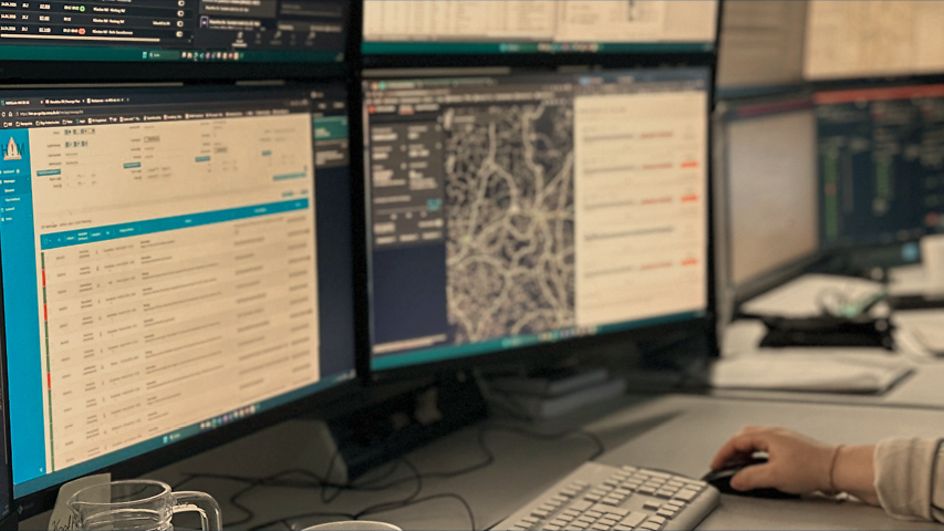
Around 500 employees work on the platform, rising to about 650 when operations is included. Some have been part of this large team for many years, and staff turnover is exceptionally low. The collaboration can be divided into two areas: technical operations and business operations. “We manage technical operations exclusively together with DB Systel. We have built a very, very strong partnership there. It is the backbone of the platform’s high stability,” says Ralf Gernhold. The operations teams ensure round-the-clock availability and respond quickly and professionally in the event of disruption. Given the enormous visibility of the connected sales channels, this is a matter of considerable public relevance. “If the platform does not work, we hear about it not only through monitoring, but also very quickly through the media,” says Ralf Gernhold.
“To me, the people in technical operations are the quiet heroes. They keep this complex system running and step in immediately in the event of a disruption.”

By contrast, the business operations function provides the overarching framework for all applications of long-distance rail’s digital sales platform in live operations – from both a business and a technical perspective. For DB Fernverkehr, it is the central lever for safeguarding business requirements relating to availability, performance and stability in live operations, reducing disruption, shortening recovery times through clear processes, and ensuring that changes reach production in a controlled way and without unnecessary risk.
Business operations also connects the requirements of the specialist departments with operational IT processes and creates transparency around quality, risk and the improvements needed in live production. As with the wider context of long-distance rail’s digital sales platform, the collaboration between business operations management and technical operations management is focused, transparent and built on trust. This enables teams to act quickly, in a coordinated and solution-oriented way – especially in the event of disruption – and to resolve incidents at speed, entirely in the interests of DB and its connected sales partners.
For Ralf Gernhold, the team’s identification with the digital sales platform they are jointly responsible for plays an important role: “Colleagues in the team strongly identify with the shared product. It is a wonderful feeling when, for example, you are sitting in a restaurant, glance across the room and see someone at the next table opening DB Navigator, and you can say: my work is part of that too. Because of its enormous visibility, that creates a tremendous sense of identity and belonging. That is our advantage, and we make full use of it.”
Continuous development with a focus on travellers
The digital sales platform is evolving continuously. “We never have a big bang,” says Alireza Raisnia, Product Owner, Sales Solutions co-operation group at DB Systel. Instead of a small number of major releases, improvements are introduced step by step. New functions are rolled out gradually, validated through A/B testing and, where necessary, refined or withdrawn. Usage after go-live is also analysed systematically.
“We have been practising business-IT fusion here for several years now, and it is firmly established in the projects. We are all working in responsible roles.”

“Thanks to the ongoing development of the digital sales platform, we can implement changes and adjustments very quickly. That means we can respond promptly to customer feedback. Deutsche Bahn customers are always at the centre of what we do,” explains Ralf Gernhold. A joint UX team from DB Fernverkehr and DB Systel supports every stage of further development. In addition, the operational product management team continuously evaluates customer feedback and feeds it directly into the development process.
Proud of what has been achieved
New functions are already in the pipeline. For example, the digital BahnCard 100 will be available to book from 14 June 2026. At the same time, additional legacy systems are being replaced. “There are still a few legacy systems in use, such as the reservation system, but these too will be replaced by new, innovative solutions,” adds Thomas Weber.
“Together, as Deutsche Bahn, we conceived, developed and now operate a new digital sales platform in Germany from the ground up using state-of-the-art technology, and we run it with a very high level of stability. That is a major achievement – one of which we, and Deutsche Bahn as a whole, can be proud,” concludes Ralf Gernhold.
 Go
Go